
Conduct Advocates
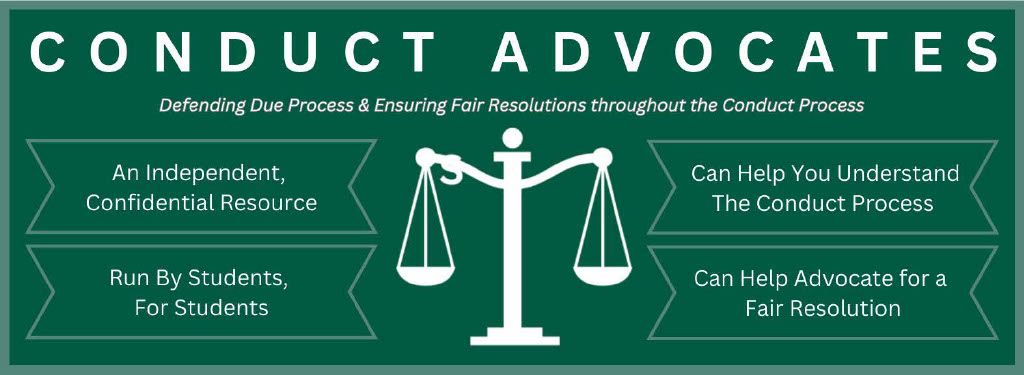
Conduct Advocates is an independent, confidential resource that can help advocate for a fair resolution while helping you to understand the Conduct Process. The goal of the student-run Conduct Advocates program is to protect due process by providing resources and support for any student accused of violating University policy who requests such, proactively promoting increased due process protections in University policy, and educating the student body about its rights.
Please fill out our inquiry form to set up a meeting or search through the additional tabs above for more information regarding the program.
If you have any questions please reach out to: conductadvocates@binghamtonsa.org.
Conduct Advocates Meeting Inquiry Form
FAQ
KEY TERMS:
Accused/Respondent: The person accused of violating the Code of Student Conduct.
Code of Student Conduct: The set of University rules that outlines expected behavior, “conduct” violations, sanctions, appeals, and all other conduct-related procedures.
Complainant: The person, such as a victim, who makes a complaint against the accused/respondent; not all cases have complainants.
Office of Student Conduct: The University office responsible for writing, updating, and enforcing the Code of Student Conduct.
Preponderance of the Evidence: “More likely than not;” the standard of proof for conduct violations.
Sanction: A punishment issued for a Code of Student Conduct violation.
Witness: A person who witnessed—and is not liable for—a Code of Student Conduct violation.
CODE OF STUDENT CONDUCT QUESTIONS
Display: None
Your content goes here. Edit or remove this text inline or in the module Content settings. You can also style every aspect of this content in the module Design settings and even apply custom CSS to this text in the module Advanced settings.
Will my parent/guardian be informed if I am accused of a conduct violation?
Does the Code of Student Conduct 2 apply only to on-campus behavior?
Can I get in trouble for witnessing someone violate the Code of Student Conduct?
Can I get legally in trouble for a Code of Student Conduct violation, or does it all stay within the university system?
What is the standard of proof for a conduct violation?
If I am found guilty, what are the typical punishments?
There are a few factors that may determine the outcome of your case:
- The nature of the violation, including if multiple rules have been violated.
- The severity of the harm, damage or injury that resulted from the violation(s).
- The student’s past conduct history, especially with regard to the same or related policy violations.
- Mitigating (to make less severe) and aggravating (to make more severe) factors.
- Options for student learning with regard to the violation and associated sanction.
For more information, visit the Office of Student Conduct’s Binghamton Website.
How will conduct violations affect my student record?
Witness vs. Accused
Someone who is a witness…
- Is NOT in trouble.
- MAY OR MAY NOT be called in for a meeting with an investigator from the Office of Student Conduct.
Someone who is accused…
- MAY be in trouble.
- WILL be called in for a meeting with an investigator from the Office of Student Conduct.
STUDENT RIGHTS & RESOURCES
Display: None
Your content goes here. Edit or remove this text inline or in the module Content settings. You can also style every aspect of this content in the module Design settings and even apply custom CSS to this text in the module Advanced settings.
What are my rights if I am accused of violating the Code of Student Conduct?
Where can I find the Code of Student Conduct?
The Code of Student Conduct can be found on the Office of Student Conduct’s Binghamton Website.
Do I need a lawyer for this process?
No, you do not need a lawyer for this process (although, you may hire one). The Office of Student Conduct will send a Resource Packet along with your letter with various resources you may use.
How do I request the services of the Conduct Advocates program?
Fill out the Inquiry Form as soon as possible.
What can a Conduct Advocate do for me before and during a hearing?
When should I reach out to the Conduct Advocates program?
OFFICE OF STUDENT CONDUCT & INVESTIGATION QUESTIONS
The Conduct Process:
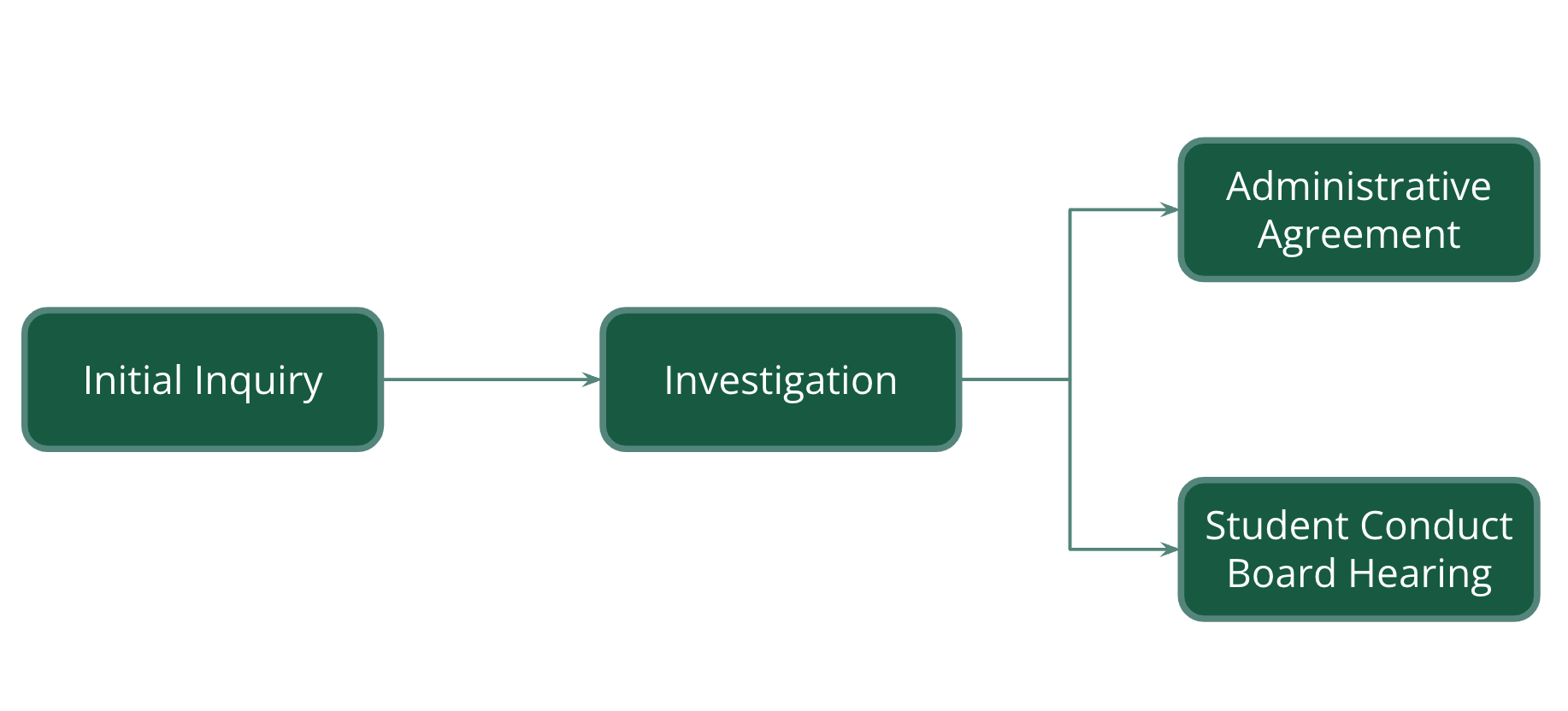
Initial Inquiry: You are contacted asking to meet with an investigator from the Office of Student Conduct; this is when you should fill out the Inquiry Form if you wish to meet with a Conduct Advocate.
Investigation: This is when the Office of Student Conduct will conduct interviews and collect evidence.
Administrative Agreement: An agreement you sign, admitting you are responsible and agreeing to a sanction.
Student Conduct Board Hearing: An evidentiary hearing in which a Hearing Board, after hearing evidence, will determine if you are guilty or not guilty.
Display: None
Your content goes here. Edit or remove this text inline or in the module Content settings. You can also style every aspect of this content in the module Design settings and even apply custom CSS to this text in the module Advanced settings.
What happens if I don’t attend my conduct meeting?
How long does the process take?
What kind of evidence will be used against me?
What happens during a hearing?
Can I appeal a hearing decision?
How does the appeal process work?
The Office of Student Conduct outlines the following guidelines for preparing an appeal:
- An appeal must be submitted in writing.
- An appeal must be written by the student charged.
- An appeal must be submitted to the Office of Student Conduct within five working business days except in cases of suspension or expulsion when the appeal
- must be submitted within 10 working business days, after receiving notification of the outcome of the hearing.
- Failure to appeal within the allotted time will render the original decision final and conclusive. Late appeals are not accepted.
- The appeals process is an administrative process.
- Appeals are decided upon the record of the original proceedings and upon written materials submitted by both parties. An appeal is not a rehearing of the case.
- Students are notified of the outcome of the appeal by letter.
For more information, visit the Appeals Guide on the Office of Student Conduct’s Binghamton Website.
What are the possible outcomes of an appeal?
An appeal may:
- Affirm the finding and the sanction imposed by the original board.
- Affirm the finding and reduce, but not eliminate, the sanction.
- Assign the case to a new hearing board.
- Dismiss the case.
- In situations wherein an appeal is lodged by a claimant in a sexual misconduct case, the person(s) reviewing the appeal may also affirm the finding and increase the sanction.
For more information, visit the Appeals section of the Code of Student Conduct.